EPISODE 006 · CAMPAIGNS → AI POLICY
Whitney Daniels on protective orders, running for office, and holding a career with an open hand
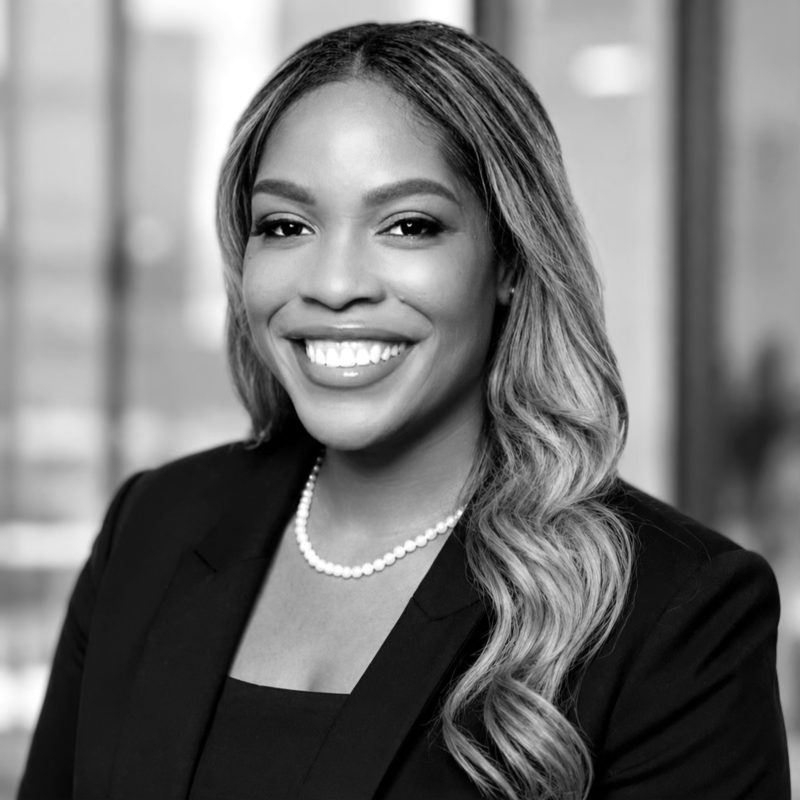
Whitney Daniels went to law school for one reason, to advocate for survivors. The first bill she worked on took protective orders online so that a woman in danger did not have to stand in a courthouse to get one. That led to policy work, to a reproductive health organization, to running for office, and now to the governor's office. This episode is about what advocacy costs, why she stepped out of the spotlight on purpose, and what changed when she stopped working from a checklist.
What you will learn
- It was never just a form. What goes into designing an online protective order for somebody having the worst day of their life.
- Advocacy has a price. She describes 2017 to 2019 as taxing emotionally, mentally and physically, and her advice to her younger self is about pace.
- Budgets are value statements. Why a funding gap is what sent her to run for a billion dollar county budget.
- Visibility is not free. She ran a campaign through COVID with her address online, and then chose to disappear.
- The AI disruption is aimed at women's jobs. Not the trades. The administrative and support roles.
- Open hand, not closed fist. The checklist that worked, and why she put it down.
Why did she go to law school?
Not for the law. She grew up in Newport News, Virginia, studied political science and urban planning, and was interested in how cities and counties get designed. Her phrase for the thread running through all of it is wanting to find the equality in the inequity, and she traces it back to grade school teachers telling her she talked too much and always had an opinion.
What redirected her was a family member who survived domestic violence. In her early twenties she watched the gap open between what the law says and what it does.
“I knew from that early age that the systems and the laws in place weren't applied equitably or in practicality. When a person experienced a very devastating situation, those laws weren't as beneficial as they intended to help the survivor.”
Whitney Daniels, Women IN episode 6
So she went to learn the criminal legal system and the Constitution inside out, with a specific goal: to get to the laws before they are enacted, and bring lived experience into the drafting rather than the aftermath.
How does a lawyer end up writing a form?
She went to corporate America first. What pulled her out was a leadership program in Arizona called Leading for Change, where participants build their own plan for change, and the more she learned about the domestic and sexual violence movement in Arizona the harder it was to stay. She left corporate and joined the Arizona Coalition to End Sexual and Domestic Violence.
The first bill she worked on passed in 2018 and brought orders of protection online. Before it, filing one meant physically going to a courthouse, which quietly assumes transportation, time off, childcare and safety. For a lot of survivors it assumes too much.
The part worth slowing down for is what happened after it passed. She was appointed to the body that handles domestic and sexual violence impacts on the courts, and sat on the working group that actually designed the online form.
“Most people may think it's just a form. But that form is for your identification. So how do you like to identify and define yourself? How accessible can this form be for someone that could be experiencing maybe the worst traumatic moment in their lives?”
Whitney Daniels, Women IN episode 6
That is the whole argument for lived experience in policy, compressed into one field on one screen. The bill is the headline. The form is where a person either gets helped or gives up.
What did the advocacy years cost?
She does not soften this. It was taxing emotionally, mentally and physically, and the window she names is 2017 to 2019, which ran through the Me Too movement and the Kavanaugh confirmation. She was young, fresh out of law school, and wanted to conquer the world, so she used the drive to keep going.
Looking back nearly a decade, the advice she would give herself is about pace, and about the thing that advocates are worst at.
“Don't forget to fill your cup back up, because if you don't, then how good or effective will you be for everyone else?”
Whitney Daniels, Women IN episode 6
Why run for county supervisor?
Because she kept hitting the same wall, which was funding, and she holds a specific belief about what that means. A budget is not an accounting document. It is a statement of values and priorities, and if the money is not there then the priority is not either.
Maricopa County is the fourth largest county in the United States and was running a budget of more than a billion dollars. She chose that seat deliberately, thinking about the departments underneath it and what they could do for people trying not just to survive but to thrive. Her own summary is shorter: she was frustrated and disappointed in the systems that existed and wanted to do something about it.
Why did she step out of the spotlight?
This is the most useful section of the episode for anyone weighing a public facing role. She ran during COVID, which meant the entire campaign happened online. Her address was searchable. She was on social media constantly, letting the algorithm dictate the ebbs and flows. At the time she did not mind, because she was fearless and because there was no family yet to consider.
What changed it was small and specific. When the world reopened, she and her then boyfriend would go places and strangers would greet him by name, because they had watched him on her feed.
“I would like to be a mother one day and I would like to get married. So me being that public official essentially will open me up for people to feel entitled to every aspect of my life, because we live in an age now where there's no separation.”
Whitney Daniels, Women IN episode 6
She is mourning something real here, and she says so: the era when a public servant could go to work, do the job and keep a normal private life, rather than operating as a political celebrity. Her move into the governor's office was, among other things, a decision to be effective without being visible.
What does technology for good actually mean?
Her answer is one word, equalizer, and then a list of what that has to touch to be true. Broadband regardless of zip code. Digital literacy. Workforce development. Education. Transportation. Being able to reach your government without the process itself becoming the barrier. Her framing of the test is the part to keep.
“People can participate fully as themselves, and not having technology happen to them, but have technology work with them.”
Whitney Daniels, Women IN episode 6
Why is AI a women's issue?
Because of where the exposure sits. She is careful first, and says the studies deserve a grain of salt and that the right response is to sweat the data rather than the headlines. Then she gives the finding.
The jobs most likely to be disrupted are not the skilled trades and labor intensive roles that traditional workforce development programs are built to serve. They are administrative, clerical and supportive roles, and those are held disproportionately by women. Which means the standard retraining infrastructure is pointed at a different problem than the one arriving.
Her conclusion is about who is in the room. If technology is going to function as an equalizer, the people building it need to reflect the society it has to coexist with, which makes representation in AI a design requirement rather than a courtesy.
What do people get wrong about government?
That nobody inside it is trying. Her experience is the opposite: public servants who are dedicated, compassionate and genuinely innovative, solving complicated problems inside systems with limited resources and limited headcount, because they want to do the right thing. The standard she describes is almost modest, and much harder than it sounds.
“Your interaction with government is not the worst day of your week.”
Whitney Daniels, Women IN episode 6
How did motherhood change her ambition?
It renewed it rather than shrinking it, and the mechanism is intentionality. She is more careful about what she says yes to, because her daughter will learn from what she does rather than what she says. The legacy she names is integrity and excellence, including when it is messy, and the ability to handle yourself with care.
Open hand instead of closed fist
In law school she wrote a list. Ten things, in order. Advocate, check. Change legislation and policy, check. Run for office, check. Vice president at the largest reproductive health organization, check. Policy in the governor's office, check. The list worked exactly as designed, and that turned out to be the problem.
What she found when she let herself relax and follow what was actually calling her was joy in the work rather than items cleared. Since then she has been creative director on a photo shoot. There is a plan for a digital library of calming music to get people through the workday. There is a fiction novel she has not written yet. She is explicit that becoming a mother is part of why success got redefined.
“I can have multiple passions and multiple purposes and multiple careers, as long as I'm leaving a legacy of integrity, of joy, and giving myself the grace that I deserve.”
Whitney Daniels, Women IN episode 6
The practical half of it is saying no. Do I have to go to this conference? Do I have to speak on this panel? What is the North Star of this project? She also notes, with some suspicion, that her algorithm has started serving her nothing but women having their Oprah moment in their forties, and wonders whether the phone should stay downstairs while she is upstairs writing in her journal.
What would she tell her 25 year old self?
One question, asked twice. Do you have to do this now? Do you have to do it, or do you want to do it? And then: give yourself time.
For her daughter it is two things. That she is capable of achieving anything she wants, and that all she has to do is continue. Whitney points to a Maya Angelou poem written for Oprah Winfrey, and the line she keeps is that you will live a good life as long as you continue. Not only will you find your way, but your purpose and your passions will find you.
What is the one thing she wants you to do this week?
Review your week and count your wins, however small. Then find the moments you were kind to yourself, and give yourself grace for the moments you were not. And continue.
Where to listen
Listen to Women IN episode 6 with Whitney Daniels wherever you get your podcasts.
Frequently asked questions
Who is Whitney Daniels?
Whitney Daniels is Senior Advisor to the Governor of Arizona, working on public interest technology and AI policy. She is a lawyer, originally from Newport News, Virginia. She worked at the Arizona Coalition to End Sexual and Domestic Violence, ran for the Maricopa County Board of Supervisors, and was a vice president at a national reproductive health organization before moving inside the governor's office.
What was the first bill she worked on?
A 2018 Arizona bill that made orders of protection available online. Before it passed, a survivor had to physically go to a courthouse to file one, which assumes transportation, time and safety that many people do not have. After it passed she sat on the working group that designed the actual online form.
Why did she run for the Maricopa County Board of Supervisors?
Because of the budget. Working in the domestic and sexual violence movement she kept running into a lack of funding, and her view is that a budget states an institution's values and priorities. Maricopa is the fourth largest county in the country and was running a budget of more than a billion dollars at the time.
What does she mean by holding your career with an open hand?
That she started out with a numbered to-do list and worked it in order, and success meant ticking the next item. She now lets intuition and interest lead, allows for multiple passions and more than one career, and treats the willingness to say no as the more important skill.
What does she say about AI and women's jobs?
That the roles most exposed to AI are not the skilled trades and labor intensive jobs most workforce development frameworks are built around. They are administrative, clerical and support roles, which are disproportionately held by women. Her conclusion is that women need to be represented in building the technology, not only counted in the disruption data.