EPISODE 003 · EMERGENCY RESPONSE → NUCLEAR
Danielle Allen on firefighting, flying, and recruiting for nuclear
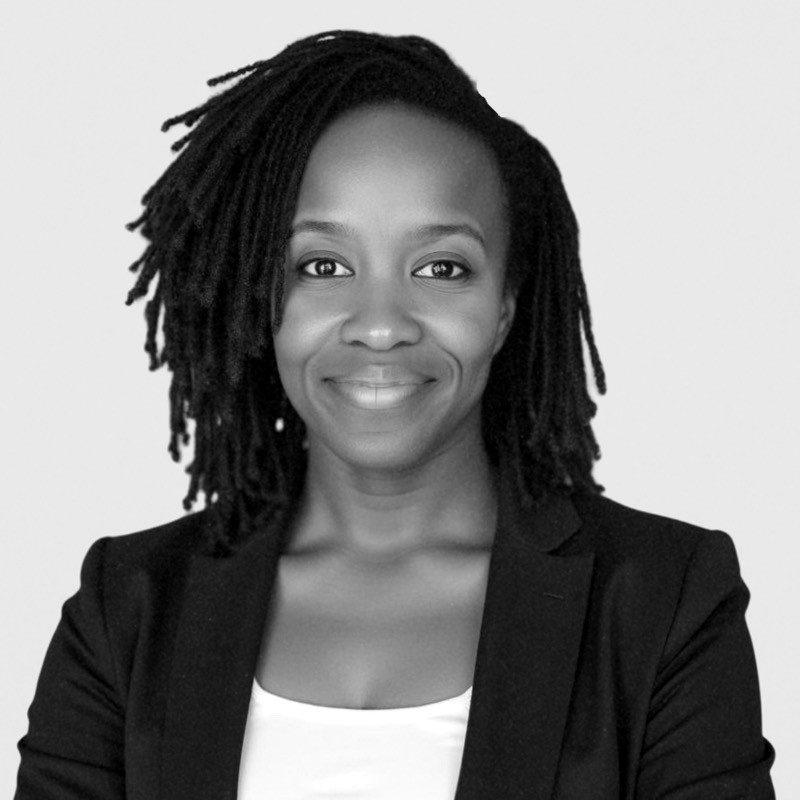
Danielle Allen is a nuclear talent scout and recruiter, a pilot, and a former firefighter, which is not a sentence you get to say very often. Nuclear is scaling faster than it can staff, and she is one of the people deciding who gets in. This episode is about how you enter an industry you have no background in, and about why the equipment not fitting you is a safety problem rather than a personal failing.
What you will learn
- Nuclear needs storytellers, not only engineers. The industry spent decades quietly producing power and never had to explain itself. Now it does.
- The non-science routes in are law, marketing, business, supply chain, project management and scheduling, and the industry is short on all of them.
- Hiring managers screen for character first. Safety culture, integrity and documentation discipline come before the technical skills, because those can be taught.
- “Male saturated” rather than male dominated, and the pattern she found in who actually gives women a hard time.
- How to treat culture as a safety issue, and why she thinks we are starting the conversation at the wrong end.
How does a firefighter end up recruiting for reactors?
She resists the framing. People call her adventure driven and an adrenaline junkie and she does not recognize herself in it. Her account is simpler: she does what interests her, and what interests her keeps moving.
The actual hinge is more surprising than the career change. She wanted to be an astronaut. She was firefighting one day and thought it would be worth working out how to go to space, which is how aviation entered the picture. She concedes, with some amusement, that exploration might be on the nose as a description of her.
What did the fire service teach her that she still uses?
Communication, and specifically the failure mode of it. Her point is that when you are the person holding the information, it is complete in your head. You know where all the detail sits. The moment you say it out loud to someone else, every gap appears at once.
“Wait, are we moving the patient over here? Wait, did you want me to pull up five CCs, or five CCs now and then five CCs later?”
Danielle Allen, Women IN episode 3
That is an emergency scene, where an ambiguous sentence has a cost. She says she still catches herself mid-email realizing the meaning is only in her head, and rewrites it. It transferred directly into nuclear, where the temptation is to assume your audience already knows every acronym.
Why does nuclear need storytellers?
Because it never had to be good at this before. Her history of the industry is that it sat quietly in the background for decades, producing clean power, with no impetus to grow or change and therefore no need for marketing. Everyone in nuclear knew nuclear. People arrived through a friend, an uncle, a mother who worked at a plant. The plants themselves have run across generations.
Then came electrify everything, AI and data centers, and a growth curve the industry had not planned for. Meanwhile the public conversation about clean energy had settled on solar and wind, with the 24/7 source that had been running the whole time barely mentioned.
“We're at a crossroads, and the stories that we tell are really going to determine the future that we build.”
Danielle Allen, Women IN episode 3
Her concern is inheritance. If the public is handed a set of beliefs aligned with fiction rather than fact, those beliefs pass to the next generation and a clean, always-on power source becomes the boogeyman. Her project is to demystify it in a way that is approachable rather than defensive.
How should the industry talk about its own past?
Directly, and without treating the problems as unique to nuclear. She separates three things: the conflation of nuclear energy with nuclear weapons, the waste question, and human factors. Her position is that being specific about what went wrong and why is the only route forward.
Her wider point is that every energy source has a right way and a wrong way to do things. She cites a wind farm in Oklahoma that had to come down because the tribe whose land it affected was never consulted. The failure was not the technology. Sondra picks this up from her own work as a strategic advisor to Native Nuclear: whether the generation is wind, solar or nuclear, the communities affected belong in the conversation.
Can you get into nuclear without a science degree?
Yes, and she opens with a story about a nuclear instructor who was a former biscuit maker and turned out to be excellent at figuring out how to teach. Her underlying belief is that everyone has the capacity to learn anything, and that we have siloed people out of fields by telling them they are not science-minded.
The practical answer is that nuclear runs on far more than physics. There is law. There is marketing. There is the business side, supply chain, project management, scheduling. None of it requires heavy-duty math, and the industry is working on making people aware those roles exist.
What matters more than your technical background is whether you fit the culture, which in nuclear means safety, doing things the right way, and documentation.
“You can teach everything else later, but teaching character and culture is really, really kind of tricky.”
Danielle Allen, Women IN episode 3
Is one male-dominated field harder than another?
Her preferred term is male saturated, and she is careful to say it is not an insult to men. Her observation is that when an industry fills up with men, some of them start to treat being there as the thing that makes them special.
Firefighting is her example. If a firefighter's sense of himself rests on lifting heavy things and driving the truck, and a woman who is five foot two and a hundred pounds lighter does the same job, she becomes a threat to that. Her reframing of the question is the useful part: not which industry has the most men, but when does a woman's presence in a role threaten the system.
The pattern she found is worth sitting with. The firefighters who treated her worst were consistently the ones who were not especially good at the job. With strong performers, men and women both, she had no issues. She points to research showing the same effect in competitive video gaming: women received hostile messages from men who ranked below them, and close to none from men at their own level.
Why is equipment that does not fit a safety issue?
Because the conclusion people draw from it is wrong. Aircraft seats are not built for her. When she learned to drive a fire truck she sat on textbooks to reach.
“People just assume that you can't do the thing, you're not very good at it. But realistically it's not that you're not good at it. It's literally because none of it was designed for you.”
Danielle Allen, Women IN episode 3
She extends the same argument to how the industry is taught. Something like 95 percent of nuclear instructors, she estimates, do not look like her: a different generation, usually male, usually white. When an instructor quietly believes a student cannot learn the material, the result is not an argument. It is being brushed aside rather than taught differently.
Which leads to her sharpest criticism of the whole get-more-girls-into-STEM conversation: we spend enormous effort recruiting women and almost none examining the environment we are recruiting them into.
The invisible work problem
She names it precisely. The woman in the group gets asked to make the coffee, schedule the meetings, clean out the shared sink, and acquires the label of team mom. It is twice the work for no credit and no pay, and she says it starts young, inside STEM programs at school and university before anyone reaches a workplace.
Her fix is not for the women carrying it. It is for instructors, mentors and anyone who can see it happening to name it and correct it before it sets.
How should organizations actually tackle this?
With an analogy from her own bank statement. She had a pile of miscategorised transactions and realized the efficient move was to start with the largest ones rather than working up from the small change.
Applied to workplace culture: starting with the two-cent problems makes the whole exercise feel like nitpicking, and makes the person raising it sound like they never stop correcting people. Starting with the severe cases, the ones that are genuinely uncomfortable to discuss, builds the empathy that the smaller corrections then rest on. She has written on LinkedIn about women killed by coworkers, and she is direct about the bystander effect that lets environments deteriorate while everyone avoids being the person who says something.
Her conclusion is the one the nuclear industry is best equipped to hear:
“Everybody is responsible for safety. And I think safety should include how we treat each other.”
Danielle Allen, Women IN episode 3
Work readiness is a serious concept in fire, aviation and nuclear alike. If someone is not in the right headspace to do the job, people get hurt. Harassment and a corrosive culture are therefore not an HR matter running alongside safety. They are a safety matter, and she wants the language around it to be stronger.
She has also been writing about what she calls a morally disabled organization: one that can no longer make the right choice, after a long enough stretch of zero consequences, zero accountability and very little transparency.
What should a woman do this week to get into nuclear?
- Look locally first. Is there a utility near you, a vendor, a fuel facility, any part of the supply chain? Where you live shapes your entry points.
- Talk to people doing the role. Not the marketing version. Ask about the hours, the culture, whether they actually promote from within. That conversation tells you whether you want the job at all.
- Then learn the industry. The history, the players, the regulatory side, the jargon, how a reactor works. The American Nuclear Society has free resources including a Nuclear 101 course. Women in Nuclear and ANS both run local chapters.
- Get on the radar before the posting exists. Ask when a utility opens applications, what a fuel manufacturer needs on the communications side, when the next fundraising round is. Her view is that human connection does more work than any job board.
What would she tell her younger self?
To shorten the window. She has noticed a pattern in herself: something interests her, she drags her feet, she argues with herself about whether she wants it, and if it is still there two years later she does it anyway. Aviation is the example. She first thought about becoming a pilot in 2021 and went to flight school in 2023.
“If you make the decision now, it's not any harder or easier two years from now. You already know what you want to do, so stop thinking about it and just do it.”
Danielle Allen, Women IN episode 3
Where to find Danielle Allen
She is most active on LinkedIn, and she hosts the Naked Nuclear podcast, which strips the fear and jargon out of the industry.
Where to listen
Listen to Women IN episode 3 with Danielle Allen wherever you get your podcasts.
Frequently asked questions
How do you get into the nuclear industry without a science background?
Danielle Allen's answer is that nuclear needs law, marketing, business, supply chain, project management and scheduling as much as it needs engineers. Her practical first steps are: find what is near you, whether a utility, a vendor, a fuel facility or another part of the supply chain; talk directly to people doing roles you might want, rather than reading the marketing version; then learn the industry itself through free resources such as the American Nuclear Society's Nuclear 101.
What does a nuclear recruiter actually look for?
Character and culture before credentials. She says hiring managers are screening first for safety culture, integrity, honesty and documentation discipline, because as she puts it, you can teach everything else later, but teaching character and culture is tricky.
Who is Danielle Allen?
Danielle Allen is a nuclear talent scout and recruiter, a pilot, and a former firefighter and paramedic. She hosts the Naked Nuclear podcast and describes her work as busting down the door for the future of the nuclear workforce.
Why does she call male-dominated industries 'male saturated' instead?
Because her observation is that when an industry is overwhelmingly male, some men begin to treat being there as what makes them special. Her experience across firefighting, aviation and nuclear is that hostility came overwhelmingly from the people who were less competent at the job, not from the strongest performers.
What is her advice to her younger self?
Shorten the decision window. She noticed she sits with an idea for roughly two years before acting on it, and that if it is still there after two years she always ends up doing it anyway. Her advice is to cut that to six months, because the decision is no harder now than it will be later and you gain the momentum.