Home/Episodes/Lauren Fitzpatrick Shanks
EPISODE 001 · AEROSPACE → ORGANIZATIONAL DEVELOPMENT
Lauren Fitzpatrick Shanks on leaving aerospace and chasing the wrong number
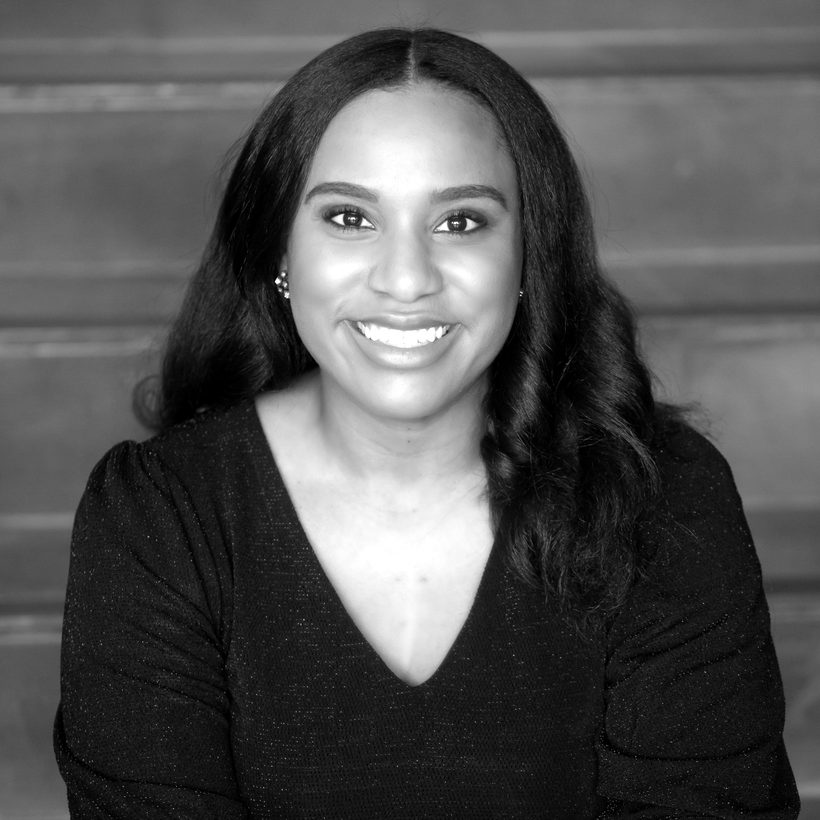
Lauren Fitzpatrick Shanks was the first Black woman to graduate from the University of Kansas aerospace engineering program, won an international design competition the year after she left, and was earning six figures by 25. She also knew, after one semester, that she did not want the career. It took eighteen years to leave it, and this episode is largely about why.
What you will learn
- She knew at the end of semester one. 4.0 GPA, and certain it was wrong.
- What made her stay was being told no Black woman had graduated from the program, which turned the degree into a point to prove.
- The MBA versus the PhD decision, and why she now says she chose wrong.
- Job hopping was the mechanism. Millennials were called disloyal for the thing that was actually working.
- Money stopped being the driver only after she left, not before.
Was engineering ever the plan?
No. Her line on it is one of the better openings this show has had:
“My father basically manifested my life.”
Lauren Fitzpatrick Shanks, Women IN episode 1
From fourth grade he told her she was going to be an attorney, and she carried that assumption through to high school. Then it emerged that she was very good at math. Her father worked at General Motors, watched how engineers were treated there, concluded it was the best deal in the building, and redirected her. He and her guidance counsellor pushed together.
She wanted to major in math. The response was the one every humanities and pure-science student recognizes: what are you going to do with that? Her answer, delightfully, was “I don't know. Math.” Told she needed something more prescribed, she agreed to engineering.
The choice of discipline was thinner still. She paid for her own education, so she was going to a state school in Kansas where her scholarships were strongest. Looking through the department pamphlet, aerospace was the only one of the disciplines that seemed remotely interesting, because her mother had put her into an aviation youth academy in her junior year of high school. That is the whole decision.
When did she know it was wrong?
After the first semester. She had a 4.0. She had an internship by the end of the second semester and worked in the industry throughout college, so she was not guessing about what the job would be. She simply knew.
She went to the diversity coordinator, who was supportive and pointed out that freshmen change major constantly. Lauren was leaning toward mechanical engineering, which felt less pigeonholing. And then the coordinator mentioned something that changed the next four years: no Black woman had ever graduated from the aerospace program.
“It was more focused on doing something that people expected me not to do than doing something that I truly wanted to do.”
Lauren Fitzpatrick Shanks, Women IN episode 1
She is 38 now and still unpicking it. People tell her, about all sorts of things, that being good at something is not a reason to do it. She describes that as a lot of unlearning, because of how often you are placed in a position where you feel you have to prove a point you do not actually need to prove.
What did the fourteen years actually look like?
Boeing first, where winning an international aviation design competition the year after graduation gave her the unusual luxury of choosing her own program. Then Northrop Grumman, still Department of Defense work. Then Leidos, working on the small diameter bomb, then a shift into geospatial intelligence. Then a move from Maryland to Arizona and, finally, the commercial side: Wi-Fi systems on aircraft, which at least felt closer to alignment because she used the product herself. Her last corporate job was at Intel.
The misalignment underneath all of it is stated plainly, and it is not a small thing to say about fourteen years of your working life.
“I don't actually believe in war.”
Lauren Fitzpatrick Shanks, Women IN episode 1
What did six figures at 25 actually mean?
This is the most useful stretch of the episode for anyone weighing a career change against a salary, because she is unusually specific about the numbers.
She graduated in 2010 into a $66,000 starting salary in the DC and Maryland market. Staying put earned you a 5 percent raise a year at best, and a promotion every two to five years, with the gaps lengthening. On that trajectory, six figures was not a three-year proposition. Job hopping was. It moved the salary, the exposure, the opportunity and, crucially, her negotiating position.
Meanwhile her generation was being lectured about loyalty. Millennials were the job hoppers, and job hopping was the only thing that worked.
She arrived at Leidos on about $90,000 and crossed six figures within two years, aged 25. And she is honest about what the number was doing for her: standing in for a direction she did not have.
“I really did not know where I wanted to go. I didn't have that North Star except for the dollar figure.”
Lauren Fitzpatrick Shanks, Women IN episode 1
There is family context here that will be familiar to a lot of listeners. Her parents were the first in their respective families to earn undergraduate degrees, then went back for master's degrees. She grew up expected to do the same. They reached six figures decades later in life than she did. She describes herself as a recovering people pleaser, and the two facts are related.
The MBA or the PhD
At 25 she faced a real fork. She could take an MBA, which Leidos would pay for in full, and keep working. Or she could go and get a PhD in psychology, which her employer would not fund because it had nothing to do with her job, which meant three to five years out of full-time work, a dissertation, and emerging on a lower salary than she was already earning.
She took the MBA. Her explanation is the same one running through the whole episode: she was still chasing the number, still climbing, still without a destination.
Asked at the end of the episode what she would tell her 25-year-old self, she does not hesitate.
“Go get the psychology degree. Do the thing that scares you.”
Lauren Fitzpatrick Shanks, Women IN episode 1
Her reasoning is not that the qualification mattered. It is that she believes the path would have made her happy sooner, and she has since worked out she could have made KeepWOL the dissertation.
What is KeepWOL, and why Chief Wonderer?
KeepWOL stands for Keep Wondering Out Loud, and the title is not a gimmick. Her observation is that we systematically remove play from work. In kindergarten you learn because learning is fun. That thins out through school, vanishes by college unless you manufacture it yourself, and in the workplace is reduced to team building scheduled twice a year, which she describes as prescriptive, forced, and obviously an afterthought.
The company came out of what she saw working in her own teams. Fast-tracked into leadership young, often in servant leadership roles where nobody reported to her directly, she had to influence people into wanting to do good work. What she found was that building genuine personal relationships produced higher quality output, faster, with fewer complaints. Part of that was protection: when someone asked her team for something that had not been thought through, she was the one who said so in the meeting.
Moving between five companies, she noticed the same gap everywhere. Leadership development mentioned human interaction as a talking point and never explained how to do it in a way that is not fake.
So KeepWOL turns the interpersonal into something measurable. It collects quantitative data across six areas that usually have no metrics attached: engagement, cultural intelligence, team dynamics, psychological safety, job satisfaction and innovation.
Why aren't there more women in engineering?
Her answer moves the question. More women are entering, but not because they spontaneously discovered an interest. They arrive through mentorship, exposure and awareness, and they stay or leave based on whether the environment was built with them in mind.
“If the spaces aren't created with women in mind, then you're not going to attract them, even though they could be the best engineer you've ever had.”
Lauren Fitzpatrick Shanks, Women IN episode 1
Sondra brings in the version she sees across nuclear, cybersecurity and oil and gas, where personal protective equipment is not made for female bodies. Lauren extends it to representation: when you look up the ladder and see nobody who looks like you, it is harder. Not impossible. But her question is the right one. Should everything always have to be challenging?
She also thinks the degree itself is badly explained. She assumed aerospace engineering meant working on things that fly, and only later understood that an engineering degree teaches you how to solve problems, which transfers to every industry there is. She now does mentorship and hiring work partly to make that point louder.
How does change actually happen?
Her framing is that women have to make it for each other, and she has a concrete mechanism: a personal board of directors rather than a single mentor. Advisors come and go, and she is relaxed about that, because mentors are for seasons.
Her own example is venture capital. She did not know what VC was, went out to raise it anyway, and it took longer and was harder than it needed to be. What changed was her first institutional investor, a woman general partner who now sits on her board and who she goes back to with everything. That investment firm, she says, looks and feels different from the ones run by men, and she attributes a large part of her ability to keep going to that support.
The broader version, which she and Sondra discuss through Melinda French Gates and MacKenzie Scott directing capital toward women: women are 51 percent of the population. If we want the change, we seek advice, accept advice, and give it.
Where to find Lauren Fitzpatrick Shanks
She is CEO and Chief Wonderer at KeepWOL, Keep Wondering Out Loud.
Where to listen
Listen to Women IN episode 1 with Lauren Fitzpatrick Shanks wherever you get your podcasts.
Frequently asked questions
Who is Lauren Fitzpatrick Shanks?
Lauren Fitzpatrick Shanks is the CEO and Chief Wonderer of KeepWOL, which stands for Keep Wondering Out Loud. She is an aerospace engineer who spent 14 years across five Fortune 500 companies including Boeing, Northrop Grumman, Leidos and Intel, and was the first Black woman to graduate from the University of Kansas aerospace engineering program.
What is KeepWOL?
KeepWOL stands for Keep Wondering Out Loud. It is an HR tech company built to create long-term workplace connections through meaningful human interaction, and to turn something usually treated as qualitative into data. It measures six areas that rarely carry metrics: engagement, cultural intelligence, team dynamics, psychological safety, job satisfaction and innovation.
Why did she leave aerospace engineering?
Two reasons. The work was misaligned with her values, because much of it was defence and military work and she does not believe in war. And the money and titles she was chasing were standing in for a direction she did not have. She says it was only after leaving that she realized money was not actually her biggest driver.
What does she wish she had done differently?
Taken the PhD in psychology instead of the MBA. At the decision point her employer would fund the MBA while the PhD meant three to five years out of full-time work and a lower salary afterwards. She took the MBA because she was still chasing a number. Her advice to her 25-year-old self is to do the thing that scares you.
What does she mean by women changing things for each other?
Building a personal board of directors rather than a single mentor, and accepting that mentors are for seasons. Her example is her first institutional investor, a woman general partner who now sits on her board and who she credits with much of her ability to keep going as a founder.