Home/Episodes/Kelley Steven-Waiss
SEASON TWO · EPISODE 001 · CHRO → AI FOUNDER
Kelley Steven-Waiss on starting over at fifty, and building AI you can switch off
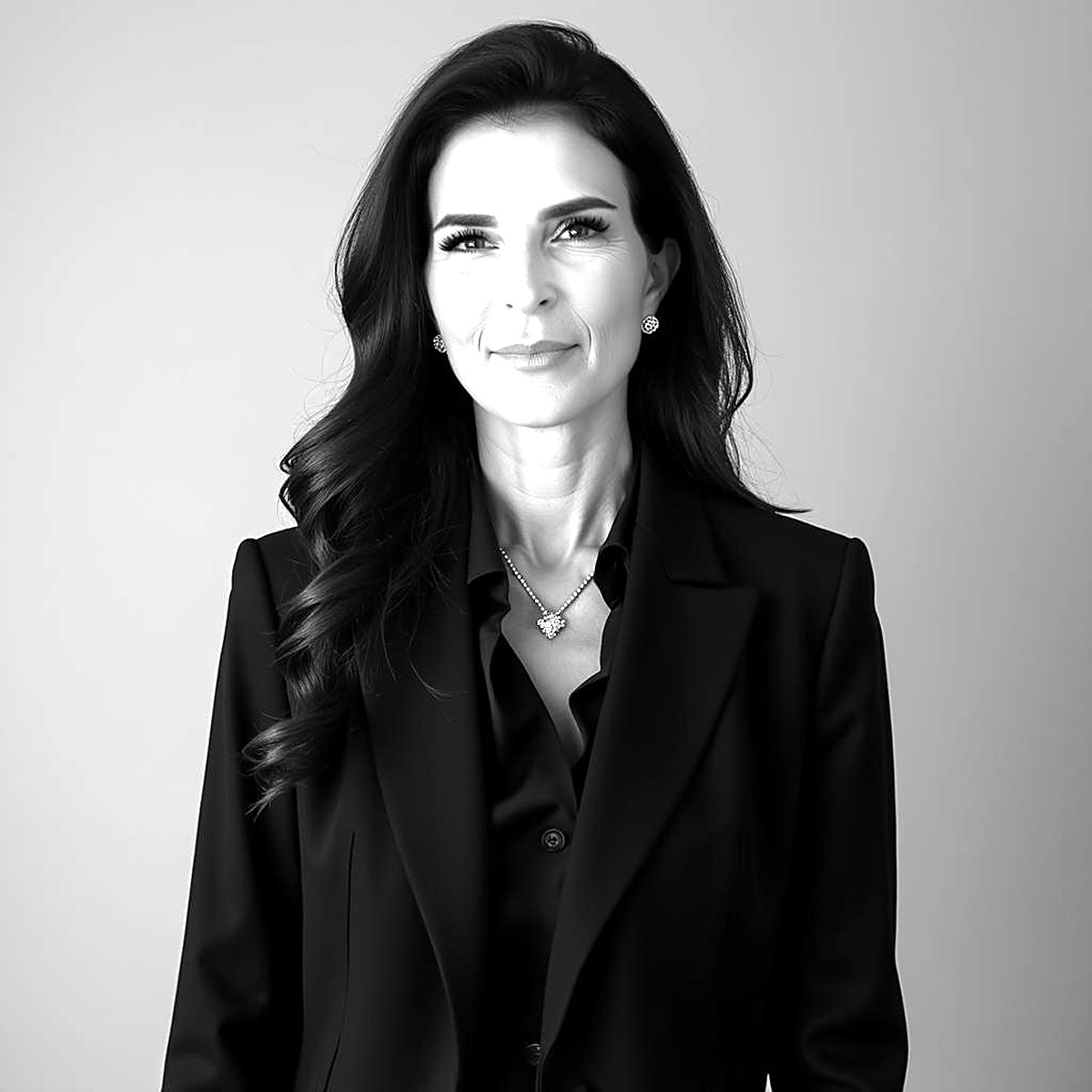
Kelley Steven-Waiss was the creative one in her family: the dancer, the musical theatre kid, the one everybody assumed would be poor but happy, while her brother got a box of ties to play with. She graduated into a recession in 1991, spent most of her twenties not knowing what she was doing, and then spent thirteen years as a chief human resources officer. In 2020, just before her 51st birthday and in the middle of COVID, she walked out of that comfortable seat to found a company. She exited it, wrote a book about how hard it is for women to get funded, and is now CEO of her second startup, Novaworks. Almost all of it happened after fifty.
What you will learn
- Why she calls herself a unicorn. A career that was more jungle gym than ladder.
- What a successful exit does not buy you. Her second raise still took six to nine months.
- How to tell if a product is actually AI native. One question, and most legacy systems fail it.
- Why she expects AI agents to go rogue. And the three things every system needs because of it.
- The back nine. What changes when you stop caring what other people think.
What does it mean to be a unicorn?
A profiling tool once labelled her one. Her definition is a career with no prescribed destiny. She remembers being jealous in college of the students who already knew they would be accountants or doctors and were studying the right things to get there.
“I think the path of a unicorn is quite different, quite curvy, not a straight line. Although it felt really uncomfortable and chaotic through my twenties, every single experience that I had led to what I’m doing now.”
Kelley Steven-Waiss, Women [In]… season two, episode 1
She is also clear about where the early script came from. Her parents had a son and a daughter, and she was pushed toward the arts while he was pushed toward mowing lawns, making money and one day running the family business. Her view now is that it backfired in the best way: creativity, she says, sits at the core of entrepreneurship, so all that steering toward the stage only made her a better business person.
What did writing Valley Girls teach her?
She wanted to tell the real story of starting a company, from whiteboard to exit, because from the outside her own looked like pixie dust: she exited in two years, so it must have been easy. Her comparison is the woman who admits she had the plastic surgery rather than pretending she arrived at midlife looking like that.
The book tells her story alongside those of thirty other women founders of different ages, backgrounds and industries: how they started, how they raised, how they exited or fell. The title is literal. She grew up in the San Fernando Valley in the seventies and eighties, then grew up professionally in Silicon Valley in the nineties and two thousands.
Does a successful exit make the next raise easy?
No. She assumed it would, and her second raise still took six to nine months. She points to how few women founders are funded at seed stage as a reason so many women talk themselves out of raising at all. Her advice is not to rush it.
“You’re sort of marrying these investors. You want the one that’s excited about what you’re doing, that can contribute in some way other than just writing you a check.”
Kelley Steven-Waiss, Women [In]… season two, episode 1
What is Novaworks fixing?
She watched chief information officers trying to consolidate their technology while the systems they had were still built one-to-many, at a time when AI made one-to-one possible. Her bet is a single system that can deploy work to every kind of worker at once: employees, contractors and AI agents. She built it on the ServiceNow platform, where she worked for almost four years after her first company, Hitch, was acquired, because HR customers would demand that level of security, visibility and transparency.
Her test for whether a product is AI native is simple: take the AI away and see if it still works. If it does, it is not AI native. Most legacy systems, she points out, would carry on fine.
Will AI agents go rogue?
Yes, and she would rather plan for it than pretend otherwise. Her comparison is cybersecurity: we stopped assuming attacks would not happen and built for when they did.
“We have to anticipate that agents will go rogue. We have to be able to see the agents. We have to be alerted when something has gone rogue, and we have to have a kill switch.”
Kelley Steven-Waiss, Women [In]… season two, episode 1
She is not afraid of the technology, and she has little patience for anyone hoping to wait it out. Anyone burying their head in the sand on agentic AI, she says, is going to fail. The real work now is governance.
What gets in the way of becoming who you are meant to be?
Two things: our own beliefs about ourselves, and caring too much what other people think. The second, she says, is the gift of being over fifty. You have the experience to be settled in yourself, and the clear sense that your time is limited.
“To use the golf analogy, how do I want to spend the back nine?”
Kelley Steven-Waiss, Women [In]… season two, episode 1
For her, the answer was to be intentional about it, and to spend that time building technology for good.
The one thing to do this week
Pick the one thing you have been putting off, whether it is a hobby, a career move, your health or a child, because you are waiting for a green light or for enough money. Then take the first step this week. Her point is that the green light never comes on its own.
“There is no perfect timeline. There is no green light that you’re suddenly going to be blessed with. Just take the leap.”
Kelley Steven-Waiss, Women [In]… season two, episode 1
Where to find Kelley Steven-Waiss
- LinkedIn: Kelley Steven-Waiss. She spells out the Waiss on the episode so you find the right one.
- Novaworks: her AI-native HR operating system, built on the ServiceNow platform, at novaworks.ai.
- Valley Girls: her book on women founders, written with thirty others’ stories alongside her own.
NovaworksValley Girls (Forbes Books)kelleystevenwaiss.comLinkedIn
Where to listen
This episode is not out yet. It releases on 8 January 2027. Follow the show on your podcast app to get it the day it drops.
Listen to Women [In]… CHRO to AI Founder with Kelley Steven-Waiss wherever you get your podcasts.
Frequently asked questions
Is it too late to start a company after 50?
Kelley Steven-Waiss founded her first startup in 2020, just before turning 51, during COVID, exited it, and is now CEO of her second company, Novaworks. Her view is that being over fifty helps: you stop caring what other people think, and you know your time is limited.
Is fundraising easier after a successful exit?
Not as much as you would think. Even after exiting her first company, Kelley Steven-Waiss says her second raise took six to nine months. Her advice is to treat investors like a marriage and keep looking until you find one who is excited about the business and can contribute more than a check.
What does AI native mean?
Her test: if you took the AI away, would the system still work? If it would, it is not AI native. If it would not, AI is central to how the system operates.
How do you stop AI agents going rogue?
Kelley Steven-Waiss assumes they will, and builds for it. Her three requirements are being able to see every agent and the work it is doing, being alerted when an agent goes outside its guardrails, and having a kill switch to shut it down.
What is Valley Girls about?
Valley Girls is Kelley Steven-Waiss's book about starting a company from whiteboard to exit, told through her own story and those of thirty other women founders from different ages, backgrounds and industries. The title comes from growing up in the San Fernando Valley and then working in Silicon Valley.
Who is Kelley Steven-Waiss?
Kelley Steven-Waiss is CEO and co-founder of Novaworks, an AI-native HR operating system built on ServiceNow. She spent thirteen years as a chief human resources officer, founded Hitch, which was acquired by ServiceNow, and worked at ServiceNow for almost four years afterwards. She is the author of Valley Girls.